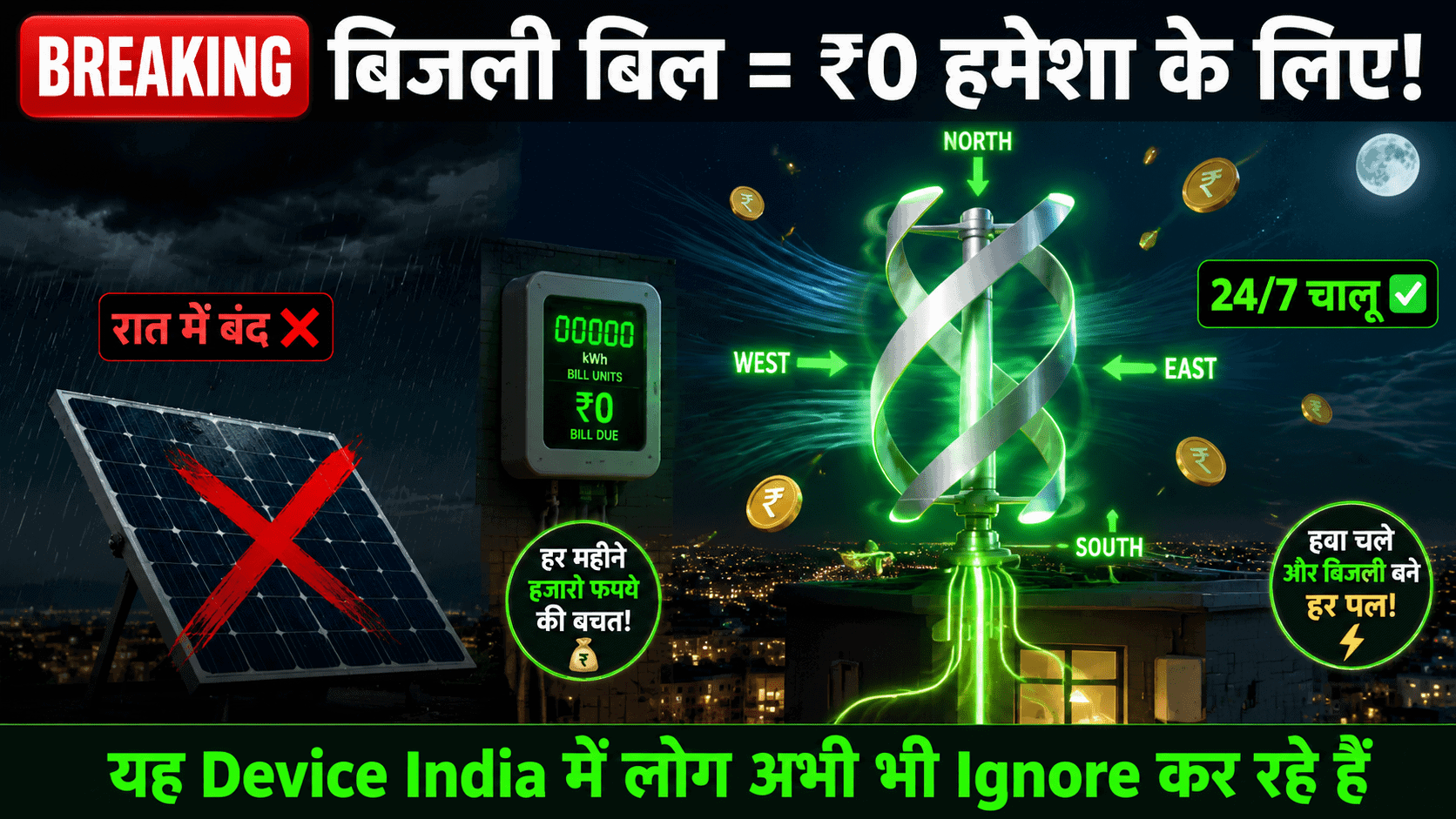
Solar panels लग गए — लेकिन रात में अँधेरा। बारिश आई — बिजली बंद। बादल छाए — generation zero। यही सबसे बड़ी कमी है solar की। लेकिन एक ऐसी device है जो दिन हो या रात, बारिश हो या आँधी — हर वक्त बिजली बनाती रहती है।
नाम है — Vertical Axis Wind Turbine (VAWT)। और India में अभी भी ज़्यादातर लोग इसे ignore कर रहे हैं।
💡 इस पोस्ट में क्या जानेंगे:
- Vertical Wind Turbine क्या है और कैसे काम करता है
- Solar Panel से कैसे अलग और बेहतर है
- Omni-directional technology क्यों है game changer
- एक घर के लिए कितना खर्च आएगा
- India में कहाँ मिलेगा और कैसे लगवाएं
- कितने साल में investment वापस आएगी
- Government subsidy मिलती है या नहीं
पहले Solar Panel की Problem समझो
Solar Panel अच्छी technology है — इसमें कोई शक नहीं। लेकिन इसकी 3 बड़ी limitations हैं जो कोई honestly नहीं बताता:
| Situation | Solar Panel Performance | VAWT Performance |
|---|---|---|
| दोपहर की धूप | ✅ Maximum output | ✅ चालू (अगर हवा है) |
| रात का समय | ❌ Zero generation | ✅ हवा हो तो full चालू |
| बारिश और बादल | ❌ Almost zero | ✅ बारिश में हवा ज़्यादा होती है! |
| आँधी और तूफ़ान | ⚠️ Risk of damage | ✅ ज़्यादा हवा = ज़्यादा बिजली |
| Winter की सुबह | ❌ Fog में कम | ✅ हवा चले तो चालू |
Simple math: Solar Panel एक दिन में maximum 6-8 घंटे काम करता है। VAWT theoretically 24 घंटे।
Vertical Wind Turbine क्या है — Simple Explanation
Wind turbine दो तरह के होते हैं:
1. HAWT (Horizontal Axis Wind Turbine): वो बड़े propeller wale turbines जो open fields में लगते हैं। इन्हें wind की direction में face करना पड़ता है — घर की छत के लिए suitable नहीं।
2. VAWT (Vertical Axis Wind Turbine): यह vertically spin करते हैं — किसी भी direction की हवा से बिजली बनाते हैं। Design compact है — छत पर, balcony पर, यहाँ तक कि खिड़की के पास भी लग सकते हैं।
Omni-Directional Technology — यही है असली Magic
Traditional wind turbines को exact wind direction में face करना पड़ता है। City में हवा की direction हर पल बदलती है — buildings से टकराकर।

VAWT की Omni-Directional design में:
- 🌬️ North से हवा आए — turbine घूमेगा
- 🌬️ South से आए — turbine घूमेगा
- 🌬️ East या West से — turbine घूमेगा
- 🌬️ Diagonal direction से — turbine घूमेगा
इसे rotate करने की ज़रूरत नहीं — यह 360° हर direction से energy capture करता है।
VAWT के Popular Designs
| Design | कैसा दिखता है | Best For |
|---|---|---|
| Savonius VAWT | S-shape blades | Low wind speed areas |
| Darrieus VAWT | Curved egg-beater shape | Medium-high wind |
| Helical VAWT | Spiral twisted blades | Urban rooftops — best for homes ✅ |
| Maglev VAWT | Magnetic levitation | Very low friction — efficient |
Homes के लिए Helical VAWT सबसे suitable है — attractive design, कम noise, और कम wind speed में भी काम करता है।
एक घर के लिए कितनी Capacity चाहिए?
पहले समझो — आपके घर की average consumption कितनी है:

| घर का Size | Monthly Units | Required VAWT Capacity |
|---|---|---|
| 1 BHK (2-3 लोग) | 100-150 units | 500W – 1KW VAWT |
| 2 BHK (4-5 लोग) | 200-300 units | 1KW – 2KW VAWT |
| 3 BHK (5-6 लोग) | 300-500 units | 2KW – 3KW VAWT |
| Villa / Large Home | 500+ units | 3KW – 5KW VAWT |
Note: VAWT के साथ battery storage system लगाने पर रात की बिजली भी store होती है।
India में VAWT की Cost — 2026 में कितना खर्च आएगा?
| System | Capacity | Approximate Cost | Monthly Saving |
|---|---|---|---|
| Basic VAWT | 500W | ₹40,000 – ₹60,000 | ₹500 – ₹800 |
| Home VAWT | 1KW | ₹80,000 – ₹1.2 लाख | ₹1,000 – ₹1,500 |
| Standard Home | 2KW | ₹1.5 लाख – ₹2.5 लाख | ₹2,000 – ₹3,000 |
| Large Home | 3KW | ₹2.5 लाख – ₹4 लाख | ₹3,000 – ₹5,000 |
Battery Storage add करें तो: ₹50,000 – ₹1.5 लाख extra (capacity के हिसाब से)।
Investment कितने साल में वापस आएगी?
Example: 2KW VAWT system — Total cost ₹2 लाख
- Monthly बिजली saving: ~₹2,500
- Annual saving: ~₹30,000
- Payback period: 6-7 साल
- VAWT की life: 20-25 साल
- Net saving (20 साल में): ₹4 लाख+
यानी — एक बार investment करो — 20 साल तक फायदा उठाओ।

Solar + VAWT Combo — सबसे Smart Solution
Actually सबसे best approach है दोनों को combine करना:
- ☀️ Solar Panel: दिन में धूप में maximum output
- 🌬️ VAWT: रात में, बादल में, बारिश में बिजली
- 🔋 Battery: Extra energy store करो
यह combo लगभग 24/7 self-sufficient energy दे सकता है।
| System | Coverage | Approximate Cost |
|---|---|---|
| Solar Only (2KW) | दिन में 60-70% | ₹1.2 – 1.8 लाख |
| VAWT Only (2KW) | Wind available तो 70-80% | ₹1.5 – 2.5 लाख |
| Solar + VAWT + Battery | 90-95% self-sufficient | ₹3.5 – 5 लाख |
India में VAWT कहाँ से मिलेगा?
India में VAWT की availability अभी limited है — लेकिन बढ़ रही है:
- ✅ Online: Indiamart.com, Tradeindia.com पर manufacturers मिलते हैं
- ✅ Companies: Avant Garde Innovations, Altair Nano, WindStream Technologies (Indian distributors)
- ✅ Startups: Several IIT startups VAWT बना रही हैं
- ✅ Import: China से import भी होता है — लेकिन after-service देखना ज़रूरी है
ध्यान दो: कोई भी vendor से लेने से पहले — installation warranty, service support, और actual wind data अपने area का check करो।

VAWT के लिए आपका Area Suitable है या नहीं?
| Area Type | Average Wind Speed | VAWT Suitable? |
|---|---|---|
| Coastal cities (Mumbai, Chennai) | 15-25 km/h | ✅ Excellent |
| Hilly areas (Shimla, Dehradun) | 15-30 km/h | ✅ Very Good |
| Open plains (Rajasthan, Gujarat) | 12-20 km/h | ✅ Good |
| Dense cities (Delhi, Bangalore) | 8-15 km/h | ⚠️ OK — helical design best |
| Humid, calm areas | Below 8 km/h | ❌ Solar better here |
Tip: India Meteorological Department (imd.gov.in) पर अपने city का historical wind data free में देख सकते हो।
Government Policy और Subsidy
India में Ministry of New and Renewable Energy (MNRE) small wind energy को support करती है:
- ✅ Net Metering: Extra बिजली grid में बेच सकते हो — DISCOM से agreement
- ✅ Accelerated Depreciation: Business owners को 40% depreciation benefit
- ⚠️ Residential Subsidy: अभी residential VAWT पर directly सोलर जितनी subsidy नहीं है — लेकिन scheme update हो रही है
- ✅ State-wise schemes: Gujarat, Tamil Nadu, Rajasthan में wind energy को अलग support है
Latest updates के लिए: mnre.gov.in visit करो।
VAWT के फायदे और नुकसान — Honest Review
| ✅ फायदे | ⚠️ नुकसान |
|---|---|
| 24/7 बिजली — रात में भी | Solar से ज़्यादा initial cost |
| Omni-directional — कोई भी दिशा | Low wind area में कम effective |
| Compact — छत पर fit होता है | India में service network limited |
| Low maintenance | Moving parts हैं — Solar से थोड़ी ज़्यादा maintenance |
| Noise बहुत कम (modern design) | Wind data पहले check करना ज़रूरी |
| Birds और wildlife safe | Height restrictions हो सकती हैं कुछ cities में |
Installation से पहले यह 5 बातें ज़रूर जानो
- 📊 Wind Assessment करो: कम से कम 1 महीने अपनी छत पर wind speed measure करो — cheap anemometer मिलते हैं
- 🏠 Rooftop की strength check करो: VAWT का weight और vibration structure पर असर डालता है
- 📋 Local permission: कुछ housing societies और municipalities height limit enforce करती हैं
- ⚡ Inverter और Battery: VAWT alone नहीं चलता — proper inverter और battery system ज़रूरी है
- 🔧 Certified installer: MNRE certified installer से ही लगवाओ — warranty के लिए
Real Case Study — India में VAWT Users के Experience
Gujarat के एक farmer ने 2KW VAWT + 1KW Solar का combo लगाया — coastal area में। Result:

- पहले बिजली bill: ₹3,500/month
- अब बिजली bill: ₹200-300/month (grid connection minimum charge)
- Total investment: ₹3.2 लाख
- Expected payback: 8-9 साल
Chennai के एक apartment building की society ने rooftop पर 5KW VAWT लगाया — common area की lighting और elevator के लिए। Annual saving: ₹1.2 लाख+।
Frequently Asked Questions
Q1. क्या VAWT flat roof apartments में लग सकता है?
हाँ — लेकिन housing society की permission ज़रूरी है। Multi-story buildings की ऊँची छतें actually ज़्यादा wind मिलती है।
Q2. VAWT की life कितनी होती है?
अच्छी quality VAWT 20-25 साल चलती है। Blades और bearings की periodic maintenance ज़रूरी है — हर 3-5 साल में।
Q3. क्या रात में VAWT से बिजली सच में बनती है?
हाँ — जब भी हवा चले। India के ज़्यादातर areas में रात को भी हवा चलती है। Battery storage के साथ रात की बिजली store होती है।

Q4. Noise कितना होता है?
Modern helical VAWT बहुत कम noise करते हैं — 35-45 dB तक। यह normal conversation से भी कम है।
Q5. Solar vs VAWT — कौन सा पहले लगाएं?
अगर area में अच्छी धूप है और wind कम है — Solar पहले। अगर coastal या hilly area है — VAWT पहले। दोनों के combo में maximum benefit है।
Q6. क्या VAWT पर loan मिलता है?
Renewable energy projects पर कुछ banks और NBFCs green loans देते हैं। NABARD और SIDBI भी rural areas में financing करते हैं।
Q7. क्या इसे खुद install कर सकते हैं?
Technically possible है — लेकिन electrical connection और structural mounting के लिए professional ज़रूरी है। DIY से warranty void हो सकती है।

India में VAWT का Future
India 2030 तक 500 GW renewable energy का target रखा है। इसमें small wind energy का बड़ा role होगा। IIT Madras, IIT Bombay जैसे institutions VAWT research कर रहे हैं। Costs हर साल कम हो रही हैं — जैसे Solar panels के साथ हुआ था।
2020 में Solar Panel ₹50-60/watt था — अब ₹20-25/watt है। VAWT के साथ भी यही होगा।
निष्कर्ष
India में लोग अभी भी Vertical Wind Turbine को ignore कर रहे हैं — लेकिन जिस दिन यह mainstream हो गया, बिजली bills की कहानी बदल जाएगी। Solar panel अच्छा है — लेकिन VAWT उसका complement है। रात की बिजली, बारिश में बिजली, आँधी में बिजली — यह technology आपकी छत को power plant बना सकती है।
अगर आपके area में wind speed 10+ km/h है — तो VAWT seriously consider करो। एक बार investment करो — 20 साल तक बिजली bill almost zero।

पहला कदम: imd.gov.in पर अपने city का wind data check करो — और एक MNRE certified consultant से free consultation लो।
Disclaimer: यह article educational purpose के लिए है। VAWT installation से पहले certified professional से assessment करवाएं। Costs और savings vary करती हैं location और usage के हिसाब से।